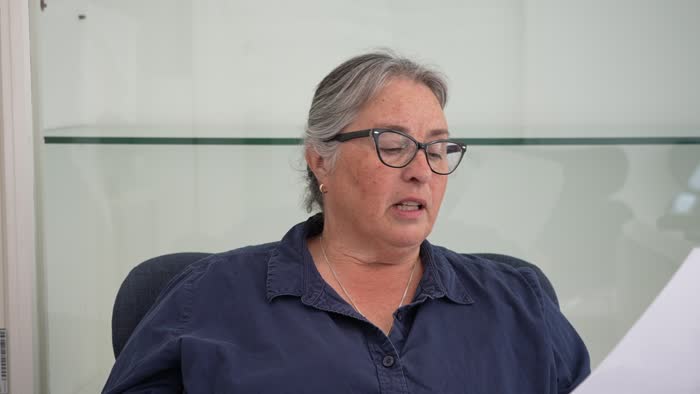
Interview with Deborah McMullen
Berlin Ethnological Museum (Contributor)
Chugach Alaska Corporation (Contributor)
Chugach Heritage Foundation (Contributor)
Deborah McMullen (Author)
Chugach Alaska Corporation (Contributor)
Chugach Heritage Foundation (Contributor)
Deborah McMullen (Author)
Deborah McMullen shares her reflections on the Chugachmiut trip to the Berlin Ethnological Museum in 2023.
Deborah McMullen reflects on what it meant to be asked to travel all the way to Germany, including experience of going from a very small village to a foreign metropolis to find a part of herself and her culture held in a museum. She speaks to the process of coming to terms with how these artifacts got here and learning about that history. She also speaks of how she began to appreciate the museum's care for the objects, the effort to secure funding, and the willingness to work with the communities and bring them all the way to Berlin to view the artifacts.
She offers a practical suggestion: that if this kind of visit happens again, written materials be prepared and included in a packet for participants to review repeatedly, because it helps to be able to revisit the experience of seeing and touching the artifacts and to better understand the whole system of how it all came to be. She also notes the importance of keeping in mind the toll that jet lag takes on Elders traveling such a long distance. She describes how overwhelming it was to be in a foreign country, but reflects that the longer she spent in Berlin, the more she came to see how kind and accommodating everyone had been — and she hopes that if anyone from the museum visits the United States, the group will have the opportunity to reciprocate that hospitality.
Deborah shares her realization that in order to reclaim their culture for their children and honor their ancestors, the work begins with bringing this experience home and sharing its importance with others. She reflects on how the trip came full circle from what she had initially imagined it would be. She expresses her hope that, driven by the desire and need to reclaim as much of their culture as possible, the communities will deepen their research into locating more of their artifacts in museums around the world and find ways to bring that heritage back into community life to share with children and future generations.
She closes with a piece of advice: that their artifacts may be in Berlin or in museums elsewhere in the world, but that does not mean they cannot be reclaimed in a myriad of ways. Whatever path the communities choose, she urges them to continue researching and reclaiming their culture for the generations to come.
She offers a practical suggestion: that if this kind of visit happens again, written materials be prepared and included in a packet for participants to review repeatedly, because it helps to be able to revisit the experience of seeing and touching the artifacts and to better understand the whole system of how it all came to be. She also notes the importance of keeping in mind the toll that jet lag takes on Elders traveling such a long distance. She describes how overwhelming it was to be in a foreign country, but reflects that the longer she spent in Berlin, the more she came to see how kind and accommodating everyone had been — and she hopes that if anyone from the museum visits the United States, the group will have the opportunity to reciprocate that hospitality.
Deborah shares her realization that in order to reclaim their culture for their children and honor their ancestors, the work begins with bringing this experience home and sharing its importance with others. She reflects on how the trip came full circle from what she had initially imagined it would be. She expresses her hope that, driven by the desire and need to reclaim as much of their culture as possible, the communities will deepen their research into locating more of their artifacts in museums around the world and find ways to bring that heritage back into community life to share with children and future generations.
She closes with a piece of advice: that their artifacts may be in Berlin or in museums elsewhere in the world, but that does not mean they cannot be reclaimed in a myriad of ways. Whatever path the communities choose, she urges them to continue researching and reclaiming their culture for the generations to come.
Do you have a story to contribute or a comment about this item?
Login/register to comment May 3 2023
Born Digital
MP4
2023.010.616.MP4
Copyright 2023 Chugachmiut Heritage Preservation
Paluwik/Port Graham (Related)